Why Most CSS Aspirants Fail — And What the Ones Who Pass Do Differently
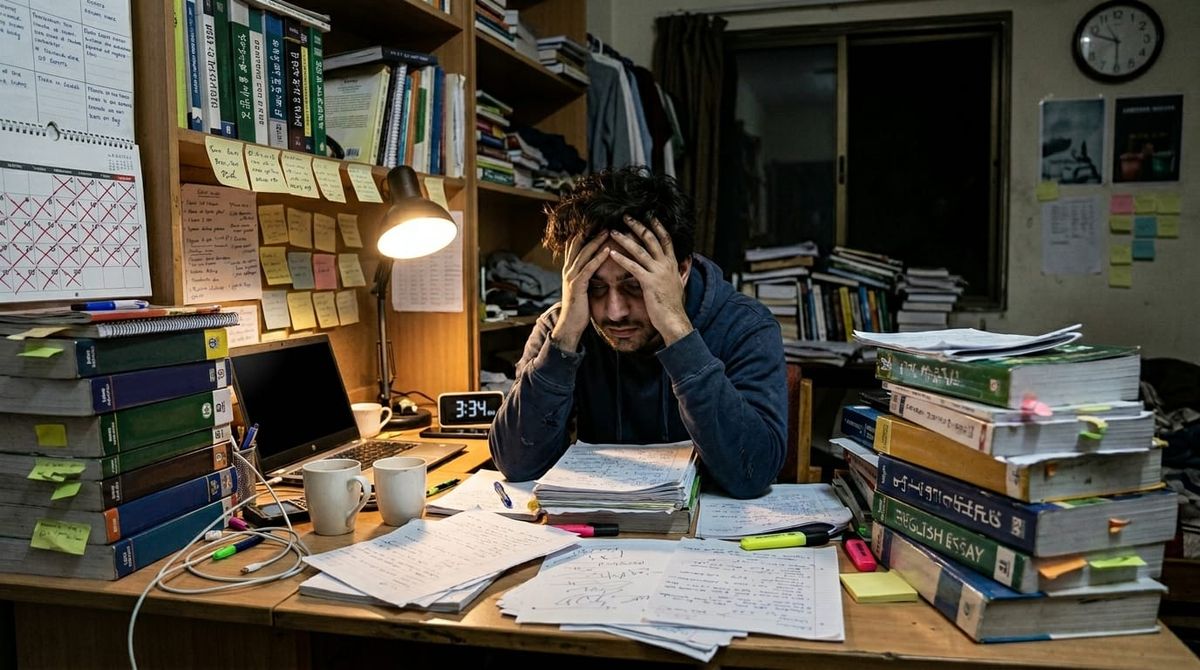
Let me be honest with you.
When you first decide to attempt the CSS exam, there's a certain kind of excitement that takes over. You start collecting books, downloading past papers, making color-coded timetables, and telling yourself this is the year. And then, somewhere between the third month and the first mock test, that excitement quietly turns into something else. Anxiety, maybe. Or the slow realization that this exam is nothing like what you imagined.
If that sounds familiar, you're not alone. Every year, tens of thousands of bright, hardworking graduates sit for the Central Superior Services examination — and over 97% of them don't make it through the written stage. That number isn't meant to discourage you. It's meant to make you ask a harder question: what do the ones who pass actually do differently?
That's exactly what this piece is about.
They Don't Just Study — They Prepare Strategically
There's a difference between being busy and being prepared. Many aspirants spend 10 hours a day reading, but without a clear direction, all that effort scatters. The candidates who clear CSS understand something early on: the exam rewards structured thinking, not raw information.
This is why the first thing you should do — before opening a single textbook — is understand the full picture. What are the compulsory papers? How are optional subjects grouped? What does the FPSC actually look for in an answer? If you haven't already, start by going through our complete CSS exam guide where we break down every paper, the marking scheme, and what examiners reward.
The exam tests 12 papers in total: six compulsory and six optional. Your compulsory papers are fixed — English Essay, English Précis & Composition, General Science & Ability, Pakistan Affairs, Current Affairs, and Islamic Studies (or Ethics for non-Muslims). Your optional combination, on the other hand, is entirely your choice — and it can make or break your score.
The Optional Subject Trap (And How to Avoid It)
This is where most aspirants stumble, and it hurts to watch.
Some students pick optional subjects based on what their friends chose. Others pick subjects they assume are "scoring," without considering their own strengths. A few pick subjects they genuinely love but later discover they can't write analytically about under exam conditions.
The right combination is personal. It depends on your academic background, your writing ability in each subject, and how much preparation time you can realistically dedicate to each paper.
For example, if you have a background in economics, pairing Economics with International Relations and Political Science can create a coherent, overlapping knowledge base — where studying for one paper reinforces the others. On the other hand, mixing subjects from completely unrelated domains means you're essentially preparing for six different exams within the same exam.
Want guidance on choosing the right combination for your background? Our optional subject selector guide walks you through every group, marks breakdown, and recommended pairings based on academic background.
The Writing Problem Nobody Talks About Enough
Here's something that doesn't get said clearly enough: CSS is fundamentally a writing examination.
Yes, you need knowledge. But the examiner sitting on the other side of your answer sheet is not just checking whether you know something — they're evaluating whether you can think clearly, structure an argument, and express ideas with precision and depth.
Many aspirants read extensively but never practice writing under exam conditions. They can tell you everything about Pakistan's water crisis, but when asked to write 20 marks worth of analysis in 25 minutes, the ideas don't come out the way they should.
The fix is not complicated, but it requires discipline: write every single day. Write précis. Write outlines for essays. Write answers to past paper questions and then read them back critically. Even 45 minutes of writing practice daily will separate you from the majority of candidates who only consume content but never produce it.
Current Affairs: The Paper That Rewards Consistency, Not Cramming
One of the most common last-minute panics in any CSS journey is Current Affairs. Candidates who didn't read regularly for 10 months suddenly try to swallow six months of global and national news in the final four weeks. It almost never works.
Current Affairs is not a paper you can prepare for in isolation from the rest of your life. It requires you to be engaged with the world — reading quality journalism, forming opinions, understanding the connections between events, and being able to present that understanding analytically.
The candidates who score well in Current Affairs don't have photographic memories. They read Dawn, The News, and occasionally Foreign Affairs or The Economist — regularly, without obsessing. They keep short notes. They practice writing 200-word summaries of important events. And over time, this builds a mental framework that makes any question approachable.
Pakistan Affairs: More Than Just History
Many students treat Pakistan Affairs as a memorization subject. Dates, events, constitutions, political timelines — they treat it like a history exam from school. And that approach costs them marks they could have easily earned.
The examiners aren't looking for a Wikipedia summary. They want analysis. Why did the 1956 Constitution fail? What structural challenges persist in Pakistan's federal governance? How has civil-military imbalance shaped the country's democratic trajectory?
These are questions that demand understanding, not just memory. And they're exactly the kinds of questions that appear year after year.
The Essay Paper: Your Biggest Opportunity
The English Essay paper is 100 marks. It's one of the first papers you sit. And it's one of the most underestimated opportunities in the entire exam.
Most candidates write generic essays that follow a predictable structure: vague introduction, loosely connected body paragraphs, forgettable conclusion. They score in the 45–55 range. The candidates who score 70 or above do something different — they treat the essay as an argument. They have a clear thesis. Every paragraph advances that thesis. The language is precise, not decorative.
A great CSS essay doesn't require a massive vocabulary. It requires clarity of thought and the ability to sustain a coherent argument across 2,500 words.
Solved Past Papers: The Most Honest Practice You Can Do
There is no substitute for solved past papers. Not mock tests. Not study guides. Not even the best teacher in Islamabad. Past papers show you exactly what has been asked, how marks have been distributed, and what level of analysis is expected.
The biggest mistake candidates make with past papers is treating them as an afterthought — something to check in the final weeks. The smarter approach is to use them from the start, as diagnostic tools. Pick a paper from five years ago, attempt it under timed conditions, and then compare your answer to the model response. Where did your argument fall short? Where did you waste words? Where were you vague when you needed to be specific?
That gap between your answer and the model answer is your study plan.
What About the MPT (Screening Test)?
Since 2016, the Mandatory Preliminary Test — the MCQ-based screening exam — has become the first gate every candidate must pass. It covers General Knowledge and Ability, as well as Current Affairs, for a total of 200 marks. Only candidates who clear the MPT cutoff are eligible to sit the written exam.
Many candidates underestimate the MPT because it's "just MCQs." But the cutoff is competitive, and walking in underprepared has ended many promising journeys before they even began.
The good news is the MPT is highly predictable. The topic areas don't change dramatically. With focused, structured preparation over 6–8 weeks, most candidates can comfortably clear the cutoff.
The Psychological Side of CSS Preparation
Nobody talks about this enough, but it might be the most important part.
CSS preparation is long. At minimum, most aspirants spend 8–14 months in serious preparation. During that time, you will have days where nothing makes sense. Days where you read ten pages and retain nothing. Days where you wonder whether this is even worth it.
Those feelings are normal. Every single person who has ever cleared CSS has been there.
What separates the ones who continue from the ones who don't is not motivation — motivation comes and goes. It's systems. It's a routine you stick to even on the bad days. It's a study structure that doesn't rely on feeling inspired.
Build your routine around consistency, not intensity. Two focused hours every morning beats eight distracted hours that leave you exhausted and resentful. Take one day off per week — not as a reward, but as maintenance. And surround yourself with people who are also working toward something meaningful, because the environment you study in shapes the quality of your thinking.
A Final Word
The CSS exam is hard. That's not a warning — it's actually part of what makes it worth attempting. Pakistan needs thoughtful, capable, principled civil servants. The exam, for all its flaws, does try to find them.
If you're reading this, you've already decided that this matters to you. The question now isn't whether you're capable — it's whether you're willing to prepare in a way that matches the difficulty of what you're attempting.
At CSS Northstar, we exist for exactly that purpose. Whether you need structured courses, one-on-one mentorship, study material, or simply a community of aspirants who understand what you're going through, we're here to guide you every step of the way.
The path to civil service is difficult. But you don't have to walk it alone.
Ready to begin? Start your CSS journey with CSS Northstar today.
